Dramaturgy is Ideology: A 3-Day Practical Post-Conference Workshop with Julian Boal
A 3-Day Post-Conference Event
This workshop is designed to be useful to both people with no experience with Theatre of the Oppressed AND experienced practitioners.
Register here / Inscríbase aquí.
Dates:
Sunday, July 26th, 2026, 130 pm (ending time TBA)
Monday, July 27th, 2026, 11 am to 6 pm, with a lunch break
Tuesday, July 28th, 2026, 11 am to 6 pm, with a lunch break plus an evening Forum Theatre session
Cost: 200 USD per person
Location:
Mixed Blood Theatre, Minneapolis, Minnesota, USA (additional information to follow)
Registration for this workshop is now open here. Please note that these workshops often fill up quickly.
 DESCRIPTION
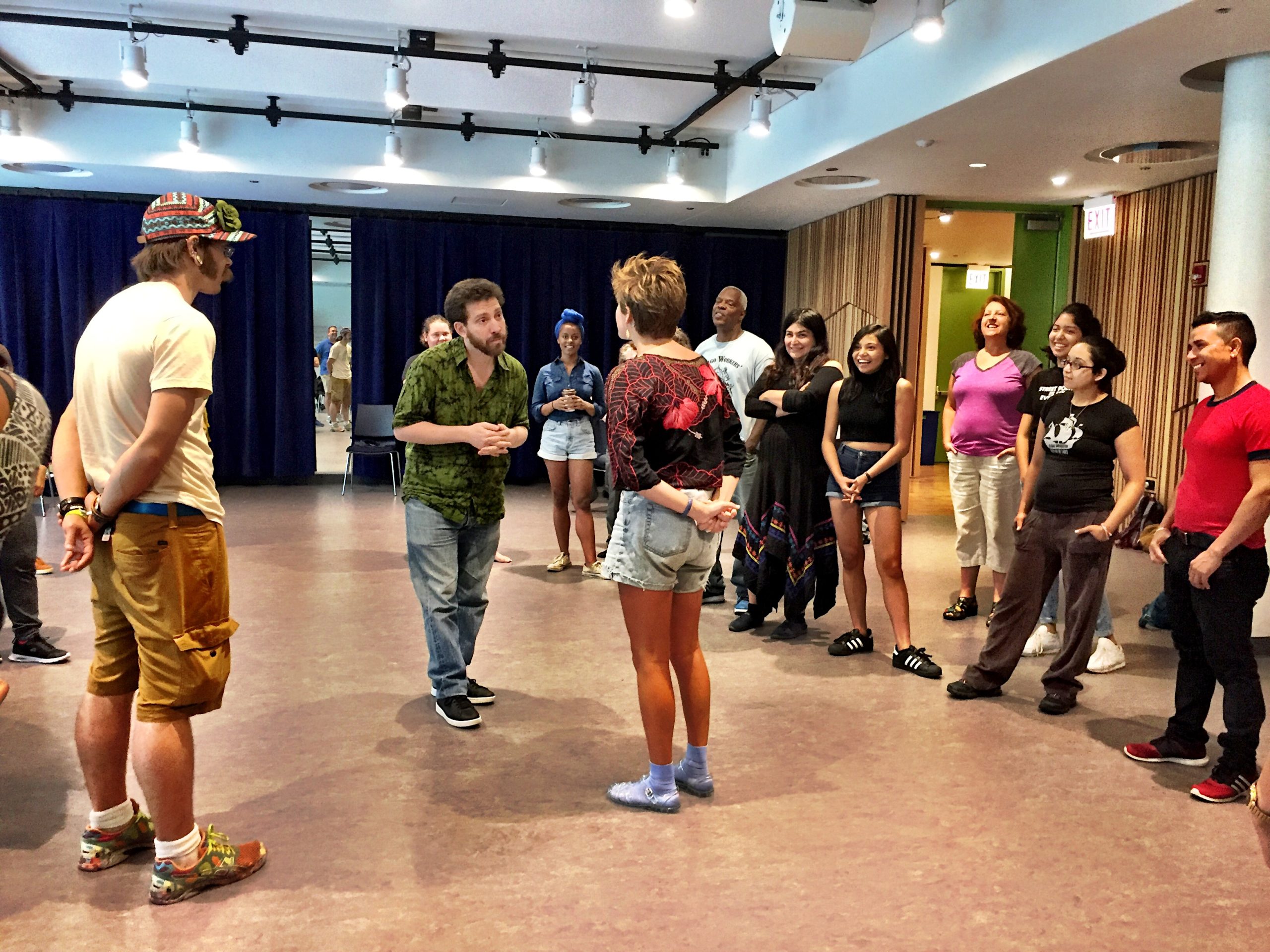
Dramaturgy is ideology. The way we represent the world theatrically is also a way of understanding it and conceiving it. The shape of a play affects the kinds of questions it can ask. Our work is often so influenced by dominant forms of narration–the forms of writing of our domination–that we often reproduce them automatically without questioning them. This workshop will be a space for practical exploration and critique of scene structures in the work of theatre for social change. On the first day, we’ll examine excerpts from various films to see how ideologies are embedded in them and then proceed to theatrical exercises that offer counterpoints to those ideologies. On the second day, we’ll explore a range of dramaturgical scene structures of Theatre of the Oppressed to consider the ideologies they stage or imply. On the third day, we’ll finalize the construction of a Forum Theatre performance. This workshop will include many Theatre of the Oppressed exercises, and it is intended to be useful for those who make plays that draw on many techniques that fall under the umbrella of Theatre of the Oppressed (Forum Theatre, Newspaper Theatre, Legislative Theatre, etc.). At the same time, the workshop will aim to be useful for people staging other forms of theatre for social change as well. The workshop will conclude with a public forum performance on Tuesday evening.*
Questions? Email Kelly at kellybhowe@gmail.com.
*Additional notes about this workshop can be found at the bottom of this page.
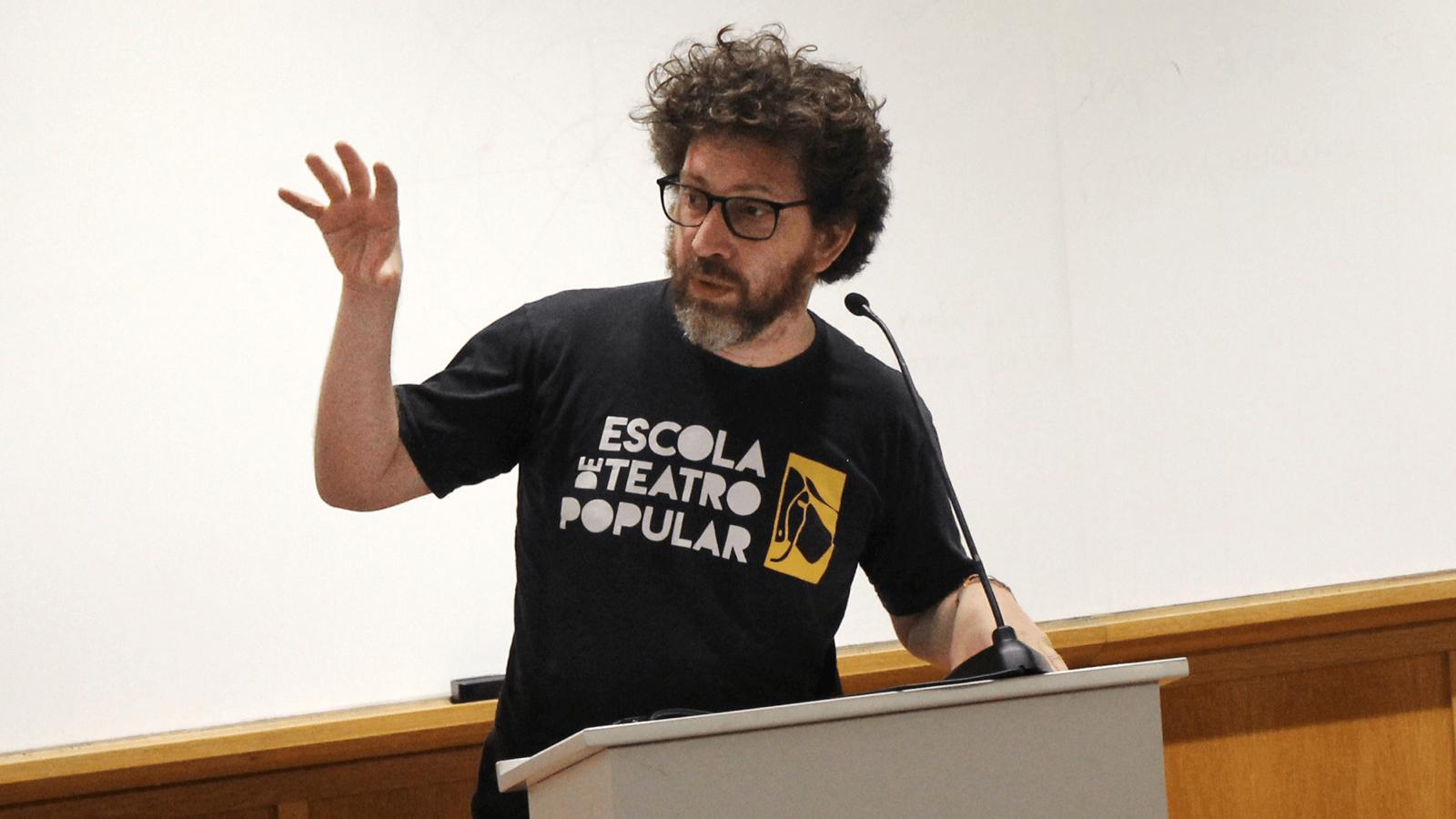 JULIAN BOAL is a teacher, researcher, and practitioner of Theatre of the Oppressed. He has facilitated workshops in more than 25 countries and has collaborated on several international festivals of Theatre of the Oppressed: in India with Jana Sanskriti, in Spain with Pa’tothom, in Portugal with Óprima, in Croatia with the Istrian National Theater, in France with GTO-Paris, and in Brazil with CTO-Rio. In Paris, he was a founding member of the Ambaata collective, which worked alongside migrant workers, and he also worked with GTO-Paris and Féminisme Enjeux. He holds a Master’s degree in History from the Sorbonne (Paris IV) and a Ph.D. from the School of Social Work at the Universidade Federal do Rio de Janeiro. Boal is the author of Images of a Popular Theatre (Hucitec, 2000), Sobre antigas formas em novos tempos: o teatro do oprimido hoje (Hucitec 2022), and Theatre of the Oppressed and its Times (Routledge, 2023). He is also co-editor of Theatre of the Oppressed in Actions (with Kelly Howe & Scot McElvany, Routledge, 2015) and The Routledge Companion to Theatre of the Oppressed (with Kelly Howe & José Soeiro, Routledge, 2019). He is the pedagogical coordinator of Escola de Teatro Popular (ETP, The School of Popular Theatre, Rio de Janeiro) and president of the Instituto Augusto Boal in Rio.
*ADDITIONAL NOTES
Language: The primary language of this workshop will be English; however, the facilitator could answer a participant question in any of the following languages: English, Spanish, Portuguese, and French. If you would like to take this workshop and have questions about the logistics of language in it, please contact kellybhowe@gmail.com.
Topics/Content: This workshop engages techniques of Theatre of the Oppressed, which are—as that wording suggests–designed precisely for people to explore oppressions that directly affect their own lives. As a result, it is impossible for the facilitator to predict or predetermine the topics that will be discussed or staged during the workshop. Please also be advised that some of the examples given by the facilitator in various moments will surely speak of various forms of oppression specifically. It is of course more than okay if a participant needs to step away from a particular discussion as a result of the content that arises. If you have any questions regarding content, please feel welcome to contact Kelly at kellybhowe@gmail.com.
Movement as an Element of the Workshop: Many of the techniques of Theatre of the Oppressed–as initially articulated and as they will sometimes be enacted in this workshop–can involve a significant amount of physical movement. Theatre of the Oppressed aims to–among other things–examine how oppression acts on the body and to avoid the oppressions of forms that devalue bodily exploration. Some of the physical movement involved in some of the exercises proposed by the facilitator could include: walking, occasional rapid walking or other rapid movement, engagement with the hands or arms, and a range of other physical activities. As Augusto Boal always maintained, however, the techniques are designed for those who enact them, not the other way around; he welcomed adaptation in this respect. Any of the exercises explored in this workshop can be adapted by individual participants at any time, in keeping with their own needs. There are also significant portions of the workshop exploration that will ultimately end up being discussion-based and not requiring significant physical movement. In addition, participants are also welcome to refrain from participation in various moments should they need to do so. That said, if you have any questions about the nature of the physical engagement that will be part of the workshop’s exploration (or any other aspect of the workshop), please contact us at kellybhowe@gmail.com.
Remember: The scenes created by the participants will be shared in a Forum Theatre session on Tuesday evening, July 28, 2026.
—
español (Aviso importante: tenga en cuenta que el idioma principal de facilitación será inglés; más detalles sobre idioma y este taller a continuación):
La Dramaturgia es Ideología: Un Taller Práctico de 3 días con Julian Boal
Costo: 200 USD
Fechas:
domingo el 26 de julio de 2026, horas por anunciar
lunes el 27 de julio de 2026, 11 am a 6 pm (con una pausa para comer)
martes el 28 de julio de 2026, 10 am a 6 pm (con una pausa para almorzar, además de una sesión nocturna de Teatro Foro)
Dónde: Mixed Blood Theatre, Minneapolis, Minnesota, USA
¡Las inscripciones ya han comenzado aquí y las plazas son limitadas!
¿Tiene Preguntas? Envía un correo electrónico a Kelly a kellybhowe@gmail.com.
DESCRIPCIÓN
La dramaturgia es ideología. La forma en que representamos el mundo teatralmente es también una forma de comprenderlo y concebirlo. La forma de una obra influye en el tipo de preguntas que puede plantear. Nuestro trabajo suele estar tan influenciado por las formas dominantes de narración—las formas de escritura de nuestra dominación— que solemos reproducirlas automáticamente sin cuestionarlas. Este taller será un espacio para la exploración práctica y la crítica de las estructuras escénicas en el trabajo teatral para el cambio social. El primer día, examinaremos fragmentos de varias películas para ver cómo las ideologías se integran en ellas y luego realizaremos ejercicios teatrales que ofrecen contrapuntos a dichas ideologías. El segundo día, exploraremos diversas estructuras dramatúrgicas del Teatro del Oprimido para considerar las ideologías que representan o implican. El tercer día, finalizaremos la construcción de una obra de Teatro Foro. Este taller incluirá diversos ejercicios de Teatro del Oprimido y está pensado para quienes crean obras que utilizan diversas técnicas del Teatro del Oprimido (Teatro Foro, Teatro Periódístico, Teatro Legislativo, etc.). Asimismo, el taller también será útil para quienes presentan otras formas de teatro para el cambio social. El taller concluirá con una función pública de teatro foro el martes por la noche.
Idioma: El idioma principal de este taller será inglés; sin embargo, el facilitador podría responder a la pregunta de unx participante en cualquiera de los siguientes idiomas: inglés, español, portugués y francés. Si desea participar en este taller y tiene preguntas sobre la logística del idioma, comuníquese con kellybhowe@gmail.com.
Temas/Contenido: Este taller aborda técnicas del Teatro del Oprimido que–como sugiere el nombre de este tipo de teatro–están diseñadas precisamente para que las personas exploren las opresiones que afectan directamente sus propias vidas. Como resultado, es imposible para el facilitador predecir o predeterminar los temas que se hablarán o presentarán durante el taller. Tenga en cuenta también que algunos de los ejemplos dados por el facilitador en varios momentos seguramente hablarán específicamente de diversas formas de opresión. Por supuesto, está más que bien si alguien necesita alejarse de una conversación particular como resultado del contenido que surge. Si tienen alguna pregunta sobre el contenido, no duden en comunicarse con Kelly en kellybhowe@gmail.com.
Nota de Accesibilidad: Muchas de las técnicas del Teatro del Oprimido, tal como se articularon inicialmente y como algunas veces se representarán en este taller, pueden involucrar una cantidad significativa de movimiento físico. Teatro del Oprimido pretende, entre otras cosas, examinar cómo la opresión actúa sobre el cuerpo y cómo evitar las opresiones de formas que devalúan la exploración corporal. Algunos de los movimientos físicos involucrados en algunos de los ejercicios propuestos por el facilitador podrían incluir: caminar, caminar rápido ocasionalmente u otro movimiento rápido, involucrarse con las manos o los brazos y una variedad de otras actividades físicas. Sin embargo, como siempre sostuvo Augusto Boal, las técnicas están diseñadas para quienes las ejecutan, no al revés; dio la bienvenida a la adaptación a este respecto. Cualquiera de los ejercicios explorados en este taller puede ser adaptado por participantes individuales en cualquier momento, de acuerdo con sus propias necesidades. También hay porciones significativas de la exploración del taller que en última instancia terminarán basadas en discusiones y no requerirán un movimiento físico significativo. Además, lxs participantes también pueden abstenerse de participar en varios momentos en caso de que necesiten hacerlo. Dicho esto, si tiene alguna pregunta sobre la naturaleza del compromiso físico que formará parte de la exploración del taller (o cualquier otro aspecto del taller), contáctenos en kellybhowe@gmail.com.
Recuerde: El taller concluirá con una función pública de teatro foro el martes por la noche.
Bio de Facilitador: Julian Boal es profesor, investigador y practicante del Teatro del Oprimido. Ha facilitado talleres en más de 25 países y ha colaborado en varios festivales internacionales de Teatro del Oprimido: en India con Jana Sanskriti, en España con Pa’tothom, en Portugal con Óprima, en Croacia con el Teatro Nacional de Istria, en Francia con GTO-Paris, y en Brasil con CTO-Rio. En París, fue miembro fundador del colectivo Ambaata, que trabajó junto a lxs trabajadorxs migrantes, y también trabajó con GTO-Paris y Féminisme Enjeux. Tiene una Maestría en Historia de la Sorbona (París IV) y un Ph.D. de la Escuela de Trabajo Social de la Universidade Federal do Rio de Janeiro. Boal es autor de Images of a Popular Theatre (Hucitec, 2000), Sobre antigas formas em novos tempos: o teatro do oprimido hoje (Hucitec, 2022), y Theatre of the Oppressed and its Times (Routledge 2023) y coeditor del DVD y libro de ensayos Theatre of the Oppressed in Actions (con Kelly Howe y Scot McElvany, Routledge, 2015) y The Routledge Companion to Theatre of the Oppressed (con Kelly Howe y José Soeiro, Routledge, 2019). Es coordinador pedagógico de la Escola de Teatro Popular (ETP; Escuela de Teatro Popular, en Río de Janeiro) y presidente del Instituto Augusto Boal de Río.
—
You must be logged in to post a comment.